11 Points: How Iran has Strategic Leverage, yet will Lose the War
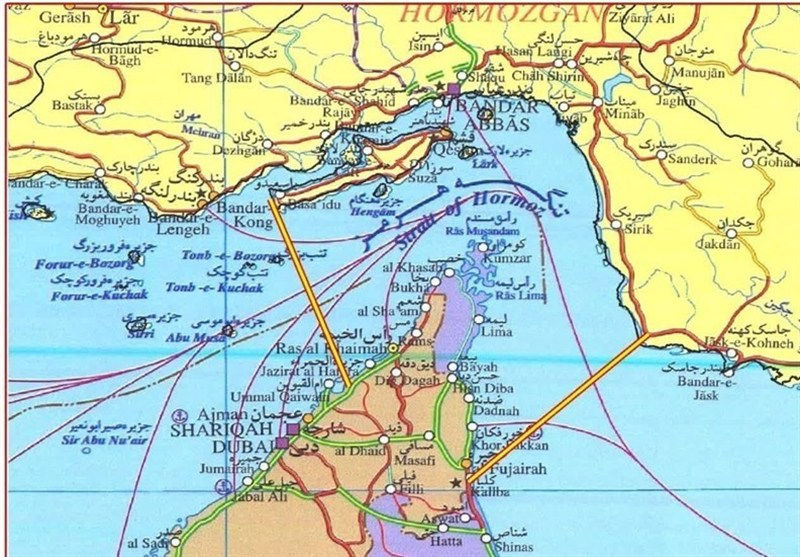
While it may be too early to predict the outcome of the US/Israel versus Iran war just as the trajectory of the famous Memorandum of Understanding inked by the Iranian and Presidents expected to deliver a final agreement in 60 days, what is clear is that Iran has lost the War and yet is gaining strategic leverage vis a vis the most powerful nation and military in the World, the United States of America.
Here are 11 points on Iran’s ability to convert geography, long term preparedness, asymmetry, alliances and timing into coercive, deterrent and bargaining power and in the end, why will still lose the War.
Firstly, Iran, unlike the United States, prepared for the long game militarily, building up asymmetric assets, missiles and drones while keeping the production nodes from total destruction by the United States. Thus, despite the US claims of having destroyed Iranian military capability, Tehran continues to have enough ability to carry out disruptive attacks, which continue to shake up the US and allies in the Gulf from Saudi Arabia to the UAE.
Secondly, Iran knows that time is on its side; there are no midterm elections, with the US in November, nor any pressure to adhere to norms of declaring war withing 60 days or seeking Congressional approval. Iranian systems centralised and opaque command with zero accountability to the public can thus dictate not just the pace of the war but also the negotiations.
Thirdly, Iran’s network of allies, the so-called Axis of Resistance, is well placed to target adversaries, be it Hezbollah, Houthis, or the Iraqi militia. Hezbollah continues to strike Israel despite having suffered heavy losses and will remain a threat in being; it is an important indirect vector in negotiations, forcing the United States to contain Israeli attacks in Lebanon. The Houthis in Yemen dominate the Bab el Mandeb straits, the exit in the Red Sea and are only now coming into play. A threat to shipping through the Red Sea will be a double whammy for energy movement after the intermittent closure of the Straits of Hormuz.
Fourthly, Iran has made effective use of geography, mainly its ability to control shipping through the Straits of Hormuz. While Iran had declared this as a strategy from time to time, there was always scepticism about the ability actually to carry it out, which has now been disproved.
Fifthly, a resilient command hierarchy has meant that the assassination of Ayatollah Ali Khamenei and senior IRGC and military commanders has not led to state collapse; in fact, it may have led to coercive command and ultra conservatives gaining a greater say in war policy and negotiations. This resilience has been built over the years and was expected to perform almost perfectly under the current circumstances.
Sixthly, decentralisation of military command down to the provincial level has given IRGC commanders sufficient authority and resources to conduct offensive fires without Tehran’s explicit instructions.
Seventhly, an offensive fire strategy targeting the enemy’s vulnerability has proved successful in acting as a deterrent for the United States to launch a full flow of military offensives, as the Gulf allies have sought restraint after suffering and continuing to be victims of indiscriminate Iranian missile and drone attacks to this day.
Eighthly, Iran has not been constrained by international law and in this, a moral equivalence with the United States and Israel's strategy of assassinations implies that Tehran will not remain inhibited, targeting merchant shipping and causing loss of lives of innocent seafarers, business and economic infrastructure in the Gulf States, amongst others.
Ninthly, effective control over the population at home was well evident; the expected uprising by the US and Israel did not happen. On the other hand, as the funeral ceremonies of Ayatollah Khamenei show, masses were mobilised with calls for revenge. While it is unclear how much of this was engineered by the IRGC and the Basij militia, Iran was able to demonstrate control of the internal space.
Tenthly, information, as a tool, was also effective in the external space, using AI and active diplomacy to convey the message to the international community at large, and particularly to adversaries such as the US and Israel.
Eleventhly, Iran knew the enemy – the United States and Israel and more particularly US President Donald Trump, whose personality, psychology and idiosyncrasies were exploited by Tehran at various stages of the war and negotiations and will continue to do so. Iran may have also assessed that Mr Trump is now looking for an early closure of the ongoing war and is expected to take advantage of the same.
Despite perception of leverage, Iran may already have lost the War. The economic losses for the Iranian nation and particularly the people at large are devastating. The economy cannot be built on levies on ships transiting the Gulf; it will require integration with the regional and global economies, a prospect unlikely in the foreseeable future.
In a long war, Iran is bound to lose, and even if reparations are provided and sanctions removed, rebuilding the nation will take decades, and there will be no ‘Marshal Plan’ here. Iran may also have lost the confidence of its closest neighbours – the Gulf Arabs - drawing them into a long-term adversarial relationship.
Finally, the call for revenge at the Khamanei funeral implies that the enmity between Iran and the United States or Israel which is in the fifth decade after the Iranian Revolution in 1979 and subsequent events, will continue through the 21st Century, sans correctives.


The primary benefit of Free Games is their accessibility. Before they could start playing, customers occasionally had to purchase expensive gaming peripherals or actual copies of the games. People may now instantaneously participate in hundreds of fascinating activities thanks to contemporary browsers and internet technologies. Millions of players seeking enjoyment without pointless challenges have been drawn in by this simplicity of usage.