Risk and Advisory 80/2026: A Defining Fortnight in the Middle East

The coming fortnight in the ongoing wars in the Middle East is expected to bring about transition if not tectonic shifts from U.S. Mid Term Polls, Israeli parliament elections to United Kingdom’s air defence support to Saudi Arabia even as Iran continues to overplay its hand in diplomacy. Here is a review-
Two weeks before the U.S. Mid Term Polls, Iran and US sparring is expectedly assuming momentum. While outcome of the Mid Term Polls would decide continued control of the US House and the Senate by the Republicans, a win for the Grand Old Party will provide President Donald Trump a boost to his image as well as policies foreign and domestic.
Even if the Democrats win control of the House, overall policies of the Trump administration are unlikely to change but there would be increased restraint by the Congress.
Iran’s leaders who through over four and a half decades of enmity with the United States have a finely tuned understanding of politics in that country are attempting to derive maximum leverage with polls showing drop in approval of the war with Iran and President Trumps popularity.
Thus, not surprisingly, in what is seen as attempts for a negotiated settlement of some sorts just prior to the midterm polls, Qatari and Pakistani mediators were in Tehran on October 20. This comes immediately after Russian Foreign Minister Sergei Lavrov’s talks in Tehran and US Secretary of War Pete Hegseth’s unannounced trip to Israel.
Iranian media briefly outlined details of meetings with Pakistan Chief of Defence Forces Field Marshal Asim Munir indicating rigid stance at least in public towards negotiations with no flexibility.
Munir met the entire spectrum of Iranian top leadership. Secretary of Supreme National Security Council (SNSC) Major General Mohsen Rezaei told Munir that enriched nuclear material was a major national asset and said it would remain in the country for domestic use.
"Even a single partcile of enriched uranium will not go out of Iran", he said thus indicating that there would be not concessions on the nuclear front.
The head of the Iranian negotiating team Parliament Speaker Mohammad Bagher Ghalibaf told Pakistani general that Iran has nothing new other than its previous seven conditions for US talks.
President Masoud Pezeshkian blamed tensions in the region a result of US warmongering policies possibly hinting at discussions on escalation in the Saudi Houthi front.
News outlet Al-Araby Al-Jadeed claimed that the US agreed to release $6 billion in Iranian frozen funds but there was no confirmation from other sources. What was the concession that Iran had offered in lieu was also not clear
Suffice to say even if a pre–Mid Term poll limited agreement or MOU is reached it will have the same outcome as the Islamabad MOU given shifting goal posts by the Trump administration and lack of trust.
Meanwhile on the Saudi Houthi front, in a defining development the UK announced Royal Air Force fighter support to Saudi Arabia in the air defence role, these will presumably relieve Saudi aircraft conducting combat air patrol for attack missions.
The deployment of UK aircraft to Saudi Arabia could also help Saudi Arabia expand its air defence coverage as Houthis are reportedly targeting locations in Saudi Arabia without air defence coverage to maximize drone and missile impact. The Houthis have conducted near daily attacks targeting sites in and around Riyadh since October 1, including the King Khalid International Airport.
At the other end of the region, is Iran’s nemesis Israeli Prime Minister Benjamin Netanyahu facing polls in a week or so on Tuesday, 27 October. Iran will see a defeat of Netanyahu as a vindication even though the opposing block Yashar, Gadi Eisenkot’s centrist political party has much the same policies on Iran as the incumbent Prime Minister.
Amidst this milieu, Iran’s hardline leadership could overplay its hands as it did in the past in rejecting the Islamabad MOU which was seen as predominantly in Tehran’s favour with the outcome of more uncertainty in the Middle East amidst rising global oil prices. The outcome was a blockade on Iran’s oil exports thus declining revenue.
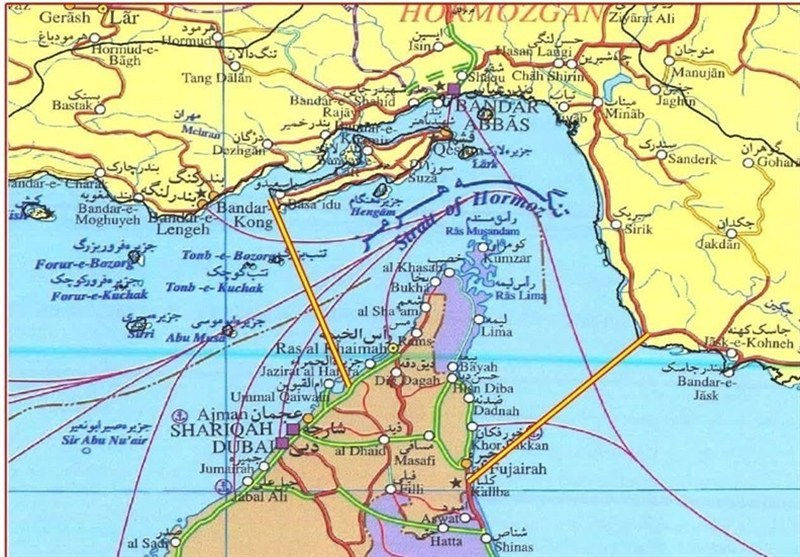
The regime however continues to boast resolute resistance claiming leverage through control of the Straits of Hormuz where several tankers have suffered damage in the past one week.

Comments