Escalation: US Blockade Strategy Could Bring Iran to the Talks Table
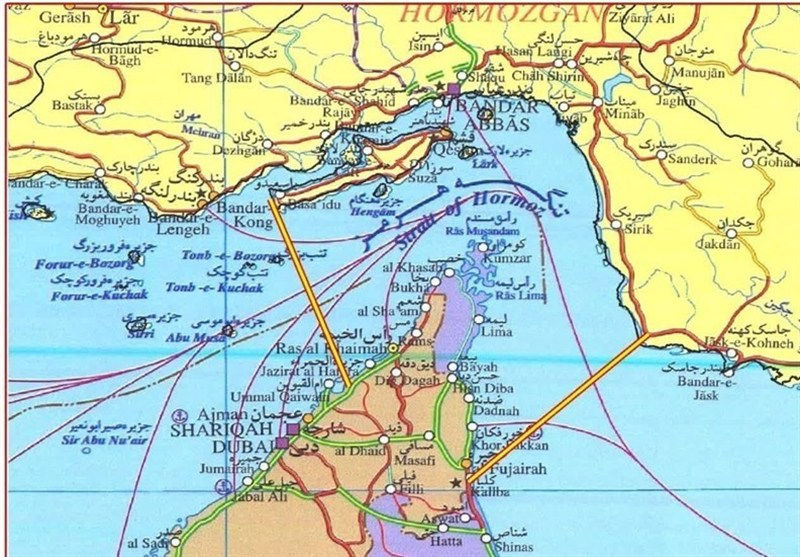
10 days of US Central Command and the IRGC exchange of missile and drone attacks, what’s the strategy and how will it shape a possible return to the negotiating table, here is a view.
30 days into the 60day decision period identified by the US Iran Memorandum of Understanding for working a final accord are now over and instead of reaching an understanding there is escalation.
The essential cause of the escalation is Iranian hardliners – the Islamic Revolutionary Guards Corps [IRGC] and their supporters in the high command unwillingness to accept the MOU seeing this as surrender particularly giving up the ability to control the Straits of Hormuz.
The hardliners had invested much by creating a Persian Gulf Strait Authority (PGSA). the PGSA is not under the Iranian government but is seen as a maritime regulatory body backed by its Supreme National Security Council and the Islamic Revolutionary Guard Corps to control the Strait of Hormuz for control of shipping through the Straits. They were to levy a tax under the garb of insurance for the shipping charging anything up to $ 2 million or more per ship. This route passed close to the Iranian coast line or the Northern route.
The United States in tandem with Oman opened a Southern route through the Straits and had commenced organising passage of merchant shipping. The IRGC with the Iranian Navy participating targeted the Southern route with several ships attacked including some on July 19 and 20.
The United States Central Command undertook a series of attacks for the past 10 days on Iranian infrastructure on the Southern coast and some deeper inside with questionable targeting of attacks on desalination plants.
Iran on the other hand has retaliated attacking US bases as well as infrastructure in Kuwait, Bahrain and even extending to Jordan – with at least two US forces killed in the latter. US President Donald Trump has vowed to seek revenge.
Importantly the US is building up fighter jets and air to air refuellers in the Middle East most possibly in Israel which has so far remained out of the current phase of air and missile skirmishes.
One option for the US now is to blockade Iranian ports particularly Bandar Abbas as well as Chabahar thus denying Tehran export of oil as well as import of essential goods.
While there is speculation that the US may be deploying Special Forces for control of the critical Kharg island. This would be a high-risk mission and may lead to US casualties which would be difficult to explain to the American public.

However, a blockade of the Iranian ports – Bandar Abbas and Chabahar – could bring Iran to the economic brink. While, this may take some time to manifest into a crisis, but the vulnerability of the Iranian economy has been raised by President Massoud Pezeshkian from to time in the last few days.
On the other hand, there are concerns over munitions shortfall with the United States while the Iranian capabilities are largely unknown and as the IRGC uses missiles as a tool to deter further US attacks by targeting ostensibly the bases in the region, apparently the numbers employed and thus expenditure is far lower.
If blockade of ports cripples the already frail Iranian economy this could be a pressure point as Iranian moderates led by Pezeshkian and Mohammad Qalibaf could gain the upper hand over the IRGC hot heads bringing diplomacy back to the fore and in terms of human losses would be a low cost option.
But we seem to be further away from that point for now so let us wait and watch.


Comments