Houthi sweep in Yemen, the limits of non-contact warfare

The prevailing military wisdom based on some recent skirmishes and not any deeper study of the ongoing wars is a preference for “non-contact warfare”.
The term has gained salience in the Indian context particularly after Operation Sindoor of May 2025 – the Indo Pakistan air, missile and Unmanned Aerial Systems [UAS] skirmish. This phrase refers to offensive against an adversary without direct physical contact between troops thus – ‘non contact’.
Development of tools of violence including battlefield transparency, long range high lethality precision weapons including air launched and land based missiles, UAS, cyber and electronic warfare to achieve a degree of superiority has contributed to expansive development of the concept.
Thus, India’s unstated new doctrine appears to pivot on extensive use of missiles and drones for offensive operations under the shield of the Sudarshan Chakra – defence of critical military and strategic assets from similar strikes by the enemy.
Arming of forces has also been undertaken based on the same with some venerable military analysts even indicating the futility of acquisition of tanks, combat fighters and artillery guns when these have limited utility as per the character of war envisaged by them in the future.
One missing facet of non contact war is ‘success’ which remains indeterminate given that there is no tangible sign of victory in the classical sense that is possession of territory, high value objective or confirmed destruction of strategic assets.
As a result, frequently both sides can claim victory be it India Pakistan in the Operational Sindoor context of Iran and the United States in the ongoing six month war or skirmishes prior to these.
On the other hand, Russia Ukraine war is a mix of conventional and non contact warfare – wherein seizure of Ukraine territory approximately 20 percent can be flaunted as a success by Russia at least to its people. While long range drone and missile skirmishes can be seen as interdiction to target the political will and war waging or economic capacity of the adversary as a corollary to operations on the ground by both sides.
Coming back to the US and Iran War, reluctance of the US armed forces to deploy boots on the ground given past experience in Afghanistan and Iraq has restricted this to massive use of artificial intelligence supported air and missile strikes to destroy Iranian military and, in some case, physical infrastructure – war waging capacity and economic potential.
Iran in turn has targeted US bases in the Middle East employing drone and missile attacks while selective targeting the energy and economic infrastructure of the Gulf countries as well as Jordan – the latter housing US bases.
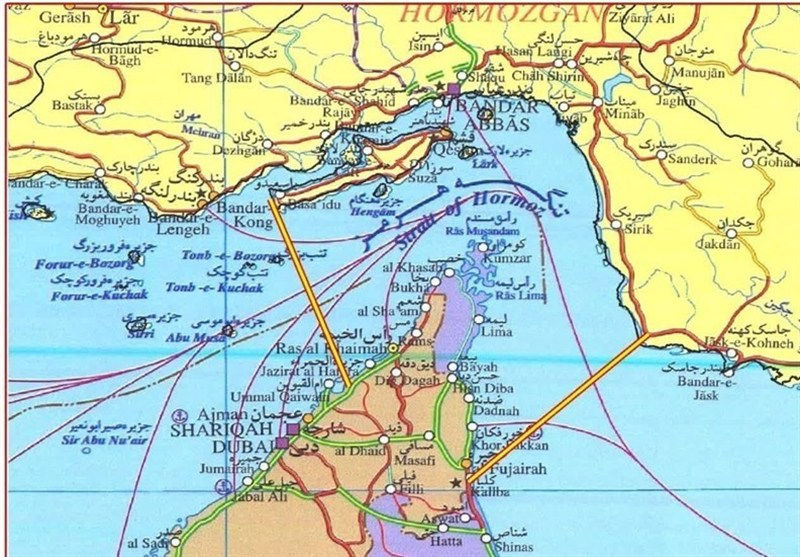
Prolongation of the war is inevitable given the resilience and strategic will demonstrated by the Iranian state and to some extent people [partially coerced] as well as focus on the strategic centre of gravity - Straits of Hormuz.
U.S. is once again relying on fire power to establish a blockade while Iranian response is concomitant selective targeting of shipping while claiming attacks on US warships. Denial is the principal medium employed to gain a dominance of the narrative which only impresses the believers.
Another new dimension has emerged in the past week, an escalation by Ansarullah popularly known as the Houthi militia in Yemen first launching several missiles and drones attacking Saudi Arabian energy infrastructure. While Saudi forces retaliated the Houthis rapidly advanced gaining control of the southern coast of the country held by the Yemen government forces supported by Saudi Arabia.
A key factor that helped the Houthis take control of the city was the withdrawal of the Yemeni National Resistance Forces supported by Saudi Arabia from physical defence o this crucial zone which dominates the Bab el Mandeb. The Saudis possibly believed that a light footprint on the ground supported by air and missile forces could prevent seizure of this vital area by the Houthis.
Thus, a second blockade of routes crucial for global oil the Bab el Mandeb after the Straits of Hormuz. Clearly Saudi air and missile strikes’ failed to deter the Houthi advance across the deserts of southern Yemen – only ground resistance could have stopped the same, but which wilted.
Now not just Saudi Arabia but the Mecca Joint Defence Alliance members Turkey and Pakistan as well as the United States and multiple other nations whose energy security is at stake are facing a double blockade.
Will continued air and missile strikes force the Houthis to abandon Southern Yemen including cities such as Mocha and islands in the Bab el Mandeb.
Who is willing to field troops for eviction if necessary, which military has forces trained in amphibious warfare to secure the Islands.
US President Donald Trump has refused a request by Saudi Crown Prince Mohmmad Bin Salman for intervention, will the much hyped Mecca Alliance chip in and what form will any counter offensive take remains to be seen.
The mute point is reliance on non contact warfare – missiles and drones cannot ensure security particularly of vulnerable strategic zones – these need to be held by strong physical defences and capacity to launch ground attacks to regain when lost.
War is a medium where there are two opposing sides, one cannot legislate adversaries choice of military strategy or weapons systems – the Houthi sweep of Southern Yemen shows that reliance on non contact warfare alone will be perilous for India’s national security with multiple vulnerabilities.

Comments