Bangladesh Violence: The Importance of Identifying Multiple Threat Actors

Multiple threat actors are currently active in Bangladesh, with some reportedly receiving support from external intelligence agencies. Identifying and containing these groups prior to the February elections is of critical importance.
Religious Affairs Adviser AFM Khalid Hossain reported that several individuals involved in the arson attack on the offices of The Daily Star and Prothom Alo have been identified, and indicated that efforts are underway to apprehend and prosecute them. The adviser also condemned the killing of Dipu Chandra Das, a garment worker in Bhaluka, who was beaten and burned to death. Addressing the attack on the cultural organization Chhayanaut in Dhaka, Khalid Hossain stated that setting fire to institutions and burning people to death are unjust and unacceptable crimes. He reiterated the government's commitment to holding the perpetrators accountable. On the night of December 19, The Daily Star and Prothom Alo were subjected to a deliberate and organized attack.
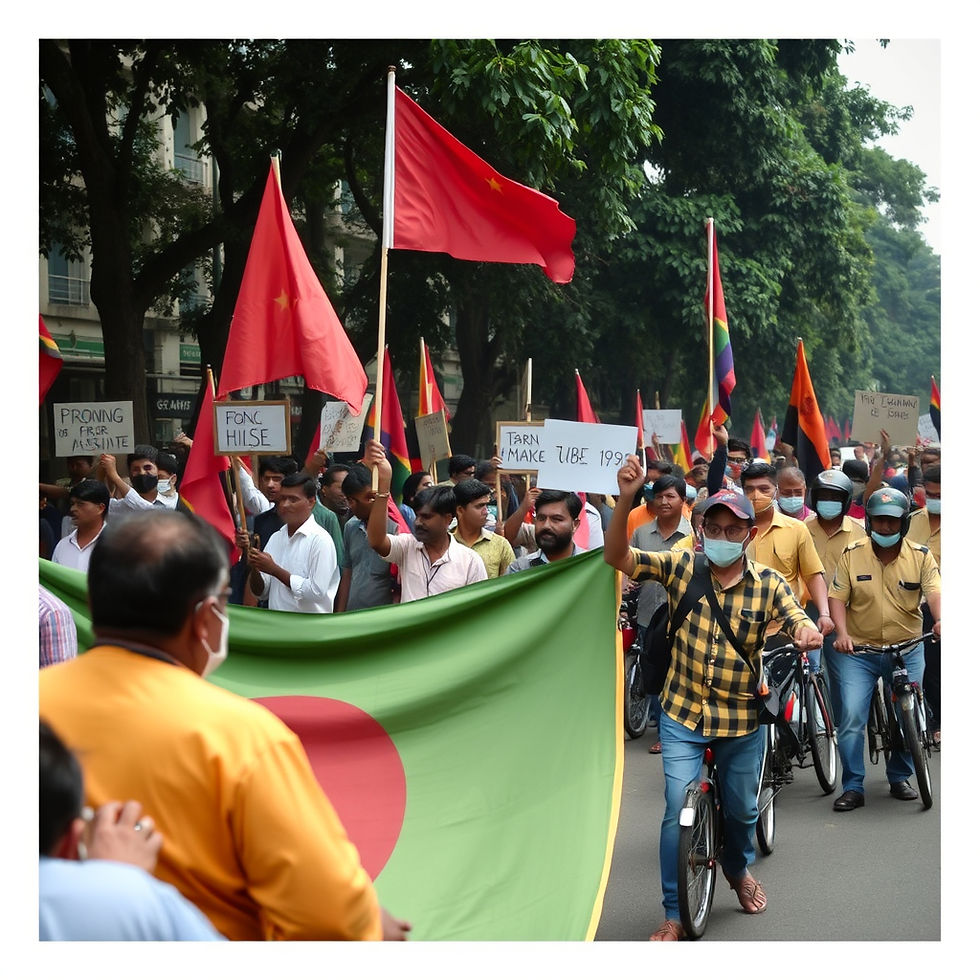
Although it is widely perceived that the protestors were primarily anti-Awami League and anti-India, their attacks on media organizations have raised questions regarding their motives. This suggests the presence of multiple threat actors operating within Bangladesh's unstable law-and-order environment. A closer examination of these attacks is warranted.
The targeting of Bangladesh’s leading media houses, Prothom Alo and The Daily Star, indicates an attempt to intimidate independent media. These two dailies are widely regarded as the most popular and are recognized for their fair and unbiased reporting. During the Awami League's tenure, both publications have been critical of Prime Minister Sheikh Hasina and have faced significant backlash. However, a direct attack on these institutions represents an unprecedented escalation.
Politically motivated actors aligned with groups opposed to press freedom are likely responsible for the attacks. Suspicion centers on the Jamaat-e-Islami’s student wing (Chhatra Shibir) and Inqilab Mancha. Additionally, coordinated groups such as Students Against Hegemony, which organize targeted attacks against media outlets perceived as adversaries, warrant further scrutiny.
Radicalized violent youth groups, which have emerged over the past eighteen months as vigilantes exploiting ongoing unrest, also constitute a potential threat actor.
There is credible evidence to suggest that some or all of these groups receive support from external intelligence agencies, specifically the Inter Services Intelligence (ISI), with possible involvement from elements within the Bangladesh Director General of Forces Intelligence (DGFI).
Additionally, opportunistic mobs influenced by public sentiment, as well as miscreants engaging in vandalism, looting, or personal gain, often merge with larger protest crowds and may also contribute to the violence.
It is essential for Bangladeshi law enforcement agencies to conduct a comprehensive assessment of the diverse threat actors, rather than focusing solely on the hypothesis that these groups are primarily anti-India or anti-Awami League. Overlooking other actors may allow them greater opportunity to disrupt the upcoming elections, where security enforcement will be a critical concern.



Comments