Israel's Treacherous Gambit: Ajay Sahni
Second Sight Read Original Here
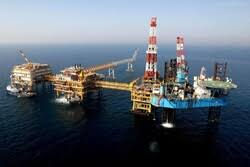
The Israeli strike on Iran's South Pars gas field on March 18, 2026, represents one of the most consequential escalations in the ongoing Iran-Israel conflict, as the first direct strike on critical energy infrastructure, and will have global economic significance. The South Pars field, which Iran shares with Qatar's North Dome field, is the largest natural gas reservoir in the world and forms the backbone of Iran's domestic energy system. It also underpins a substantial share of global Liquefied Natural Gas (LNG) supply through Qatari exports. Any disruption to this field therefore carries implications far beyond Iran itself. Reports indicate that the Israeli strike hit facilities in the Asaluyeh energy complex on Iran's southern coast, including gas processing units, pipelines, and associated petrochemical infrastructure linked to South Pars production, resulting in temporary suspension of operations in parts of the field. Estimates suggest that roughly twelve percent of Iran's gas output was affected, a level of damage sufficient to disrupt domestic supply chains and force Tehran to halt gas exports to Iraq. The immediate market reaction reflected the strategic importance of the target, with oil prices rising sharply amid fears of wider disruption to Gulf energy flows.
By targeting energy infrastructure rather than purely military facilities, Israel signalled a willingness to impose costs on the Iranian state and population, and to expand the scope of the conflict into the economic domain. Crucially, the attack comes precisely when the United State (US) appears to be looking, with increasing desperation, for a face-saving way out of this ill-conceived imbroglio, and traps Washington with a fait accompli, into an escalation cycle that President Donald Trump seemed increasingly eager to avoid. Following at the heels of the assassinations of Ali Larijani, the Secretary of Iran's Supreme National Security Council and former Chairman of Iran's Parliament, and Gholamreza Soleimani, head of the Islamic Revolutionary Guard Corps (IRGC) Basij militia, among others, the attack on the South Pars gas field shuts down any easy pathways to de-escalation that the US appeared to have been exploring. It also demonstrates the degree to which it is Israel, rather than the feckless Trump administration, that is shaping the trajectory, strategic goals and architecture of the present conflict.
Iran's response further widens the conflict. Tehran had long warned that any attack on its energy sector would be answered by strikes on energy infrastructure across the Gulf, including in Saudi Arabia, the United Arab Emirates, and Qatar. Subsequent Iranian missile and drone attacks targeted facilities linked to Gulf oil and gas production, including the Ras Laffan LNG complex in Qatar, the world's largest LNG export terminal. Even limited damage to such installations is enough to alarm markets and governments. Iranian threats to continue targeting regional energy assets raises the possibility that the conflict could move beyond a bilateral Israel-Iran confrontation and become a wider Gulf crisis.
The economic impact of the escalation has been immediate. Oil and gas prices have already risen sharply on fears that further strikes could disrupt production or shipping through the Strait of Hormuz, the world's most important energy chokepoint. The suspension of Iranian gas exports to Iraq has created power shortages there, illustrating how quickly the effects of the attack spread beyond the immediate battlefield. Concerns are also growing that damage to facilities connected to the South Pars-North Dome reservoir could affect Qatar's LNG output, which would have serious consequences for energy-importing countries in Asia and Europe.
Strategically, Israel's willingness to strike economic infrastructure indicates that it is prepared to accept higher escalation risks in order to impose pressure on Iran, while Iran's retaliation against Gulf energy facilities shows that it will not hesitate to regionalise the conflict. If attacks begin to threaten shipping lanes and major export terminals the US and Gulf Arab states are likely to be pushed towards a mounting and protracted conflict that could undermine global economic stability. The strike reflects a broader breakdown of deterrence, with both sides now targeting assets whose destruction destabilises global markets and increases risks of wider military intervention.
In physical terms, the damage to South Pars is not catastrophic, and production losses may be partly recoverable. In strategic terms, however, the impact is immense. By bringing the world's most important energy infrastructure under direct attack, the episode sharply increases the risk of a wider regional war and a global energy shock. The South Pars strike may prove to be one of the most dangerous turning points in the current conflict, not because of the scale of destruction inflicted, but because of the precedent it has set.
Ajai Sahni
Executive Director, Institute for Conflict Management; Publisher & Editor, Second Sight


Comments