Military AI: Human In the Loop or Human Outside the Loop
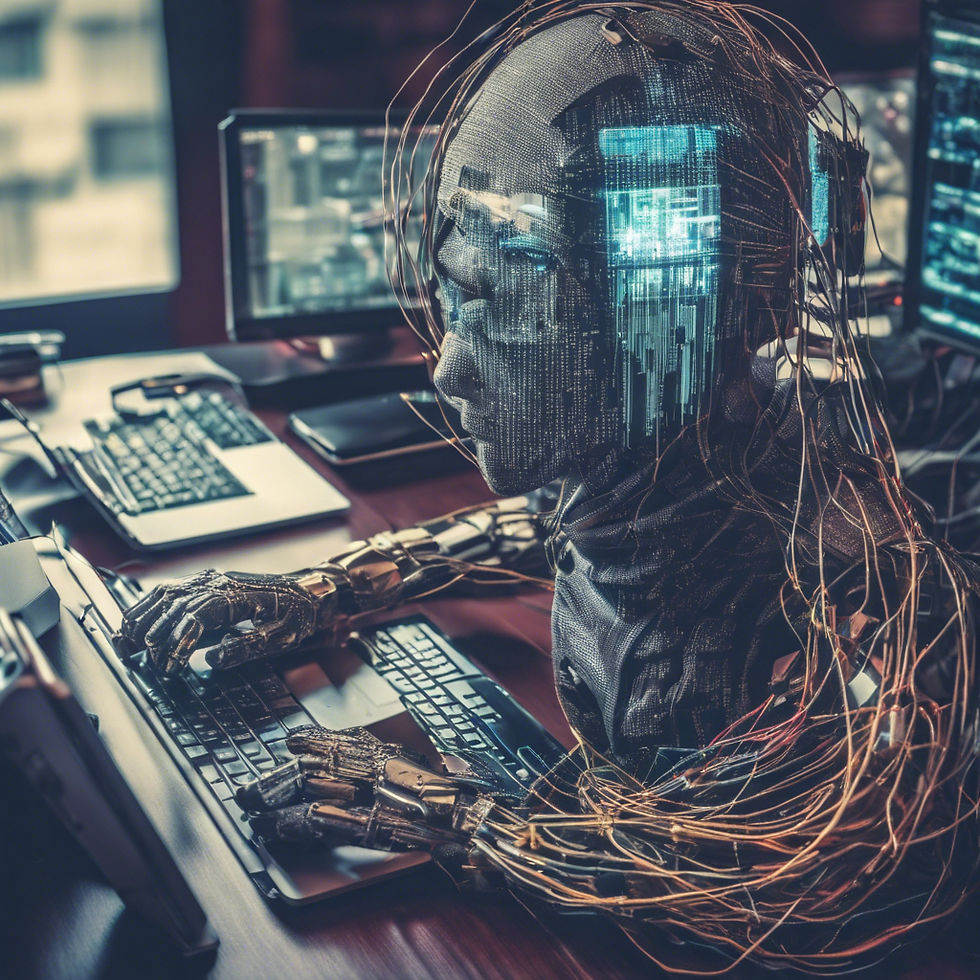
Rapid developments in the field of Artificial Intelligence [AI] in the past decade or so, based on synergy between algorithms, computing power, and data, have led to concerns about the emergence of Super Intelligence [SI] with cognitive abilities that exceed the best human minds across every domain — reasoning, creativity, strategy, memory, and social intelligence.
In the context of employment in wars, SI has dangerous portents, and some believe even AI can lead to grave unintended consequences, causing loss and harm to human lives and critical systems through kinetic and non-kinetic effects. Some of these concerns have manifested in the recent United States and Iran War ongoing since 28 February 2026.
Super Intelligence [SI] is clearly a hypothetical future in which machines universally outperform humans.
However human ability to tame or regulate AI will prevent SI from becoming a monster, and this is the critical pathway in the years ahead.
Today, we are roughly in the AI 2.0 to AI 3.0 paradigm, where Agentic AI is used for adaptive planning, and autonomous digital agents are transforming into robotics, autonomous vehicles, and real‑world embodied intelligence.
Some frontier technologies have already affected warfare, so AI is also a buzzword in military discussions in India.
Military adaptation to AI in India is ongoing, with increasing employment across domains, particularly in reconnaissance and surveillance, information synthesis, and assisted decision-making expected from a tamed AI in future tactical and operational scenarios.
Agentic AI is expected to compress the OODA [Observe, Orient, Decide and Act] Loop, a standard and simple phrase that explains military targeting – one of the most sensitive tactical facets of wars.
While AI has accelerated the Observe and Orient functions of the OODA Loop, humans still make actionable decisions. Yet Decide and Act are, in some ways, implemented in autonomous systems, such as loitering and one-way drones that operate on pre-fed data with limited cognitive capabilities.
In the future, Rapid developments in the field of Artificial Intelligence [AI] in the past decade or so, based on synergy between algorithms, computing power, and data, have led to concerns about the emergence of Super Intelligence [SI] with cognitive abilities that exceed the best human minds across every domain — reasoning, creativity, strategy, memory, and social intelligence. In the context of employment in wars, SI has dangerous portents, and some believe even AI can lead to grave unintended consequences, causing loss and harm to human lives and critical systems through kinetic and non-kinetic effects.
Despite the alarms, Super Intelligence [SI] is clearly a hypothetical future in which machines universally outperform humans. Humans' ability to tame or regulate AI will prevent SI from becoming a monster, and this is the critical pathway in the years ahead.
Today, we are roughly in the AI 2.0 to AI 3.0 paradigm, where Agentic AI is used for adaptive planning, and autonomous digital agents are slowly transforming into robotics, autonomous vehicles, and real‑world embodied intelligence. Some frontier technologies have already affected warfare, so AI is also a buzzword in military discussions in India.
Military adaptation to AI in India is ongoing, with increasing employment across domains, particularly in reconnaissance and surveillance, information synthesis, and assisted decision-making.
Agentic AI is expected to compress the OODA [Observe, Orient, decide and Act] Loop, a standard and simple phrase that explains military targeting systems.
While AI has accelerated the Observe and Orient functions of the OODA Loop, humans still make the Decide and Act decisions.
Two paradigms of AI control by humans are evident: HITL [Human in the Loop] and HOTL [Human Outside the Loop].
In HITL or Human‑in‑the‑loop systems, a commander will continue to ride the decision cycle, implying explicit human authorisation before any lethal or non‑lethal action is taken.
HITL supports target validation, proportionality assessment, and escalation control in high‑stakes missions such as counter‑terror strikes, ballistic‑missile engagements, and nuclear C2.
It ensures accountability but slows reaction time, making it unsuitable for hypersonic or saturation‑attack environments.
In HOTL [Human Outside the Loop], AI acts autonomously within predefined boundaries, and humans are supervisors to deal with anomalies when they arise. Thus, Human‑on‑the‑loop systems allow autonomous platforms such as loitering munitions and air‑defence interceptors to operate within predefined parameters while humans supervise and intervene only if anomalies occur.
HOTL is essential for high‑speed engagements, electronic‑warfare environments, and swarm operations where human reaction time is insufficient. It increases tempo and resilience but raises concerns about algorithmic error, adversarial spoofing, and escalation dynamics.
HOTL does not imply that a human is not in control, but as a supervisory role, it may be too late to intervene to avoid undesired outcomes that violate international laws of war.
A commander must assess not only the operational environment, the force's role and tasks, enemy configuration, and the AI proficiency of the system or agent being employed before deciding on the HITL or HOTL model.
Ideally, HITL should be preferred until HOTL uses an AI that is well regulated, trained, and sensitive to concerns such as fratricide, adherence to the laws of war, civilian casualties, and collateral damage.
Caution in HOTL and HITL is essential, as Agentic AI raises major concerns, as Indian CERT-In warned on October 15. “CERT-In has observed different categories of cyber incidents in which the attacker system is capable of autonomously planning work, issuing commands, invoking tools extended periods”.
The incidents came to light through voluntary disclosures by AI model providers, activities, and CERT-In's own proactive threat hunting as per the advisory.
This underlines the need to employ AI models that are trained and under human control, whether in HOTL or HITL mode.
Until then, AI will remain limited mainly to the Observe and Orient Role.
For AI to be effectively employed with complete fidelity for Decision and Action may take years or even decades, as it will take time to train AI models to make not just speedy but ethical decisions based on the laws of war and prevent unregulated, unrestricted employment. This caution needs to be enforced in the future.


Comments